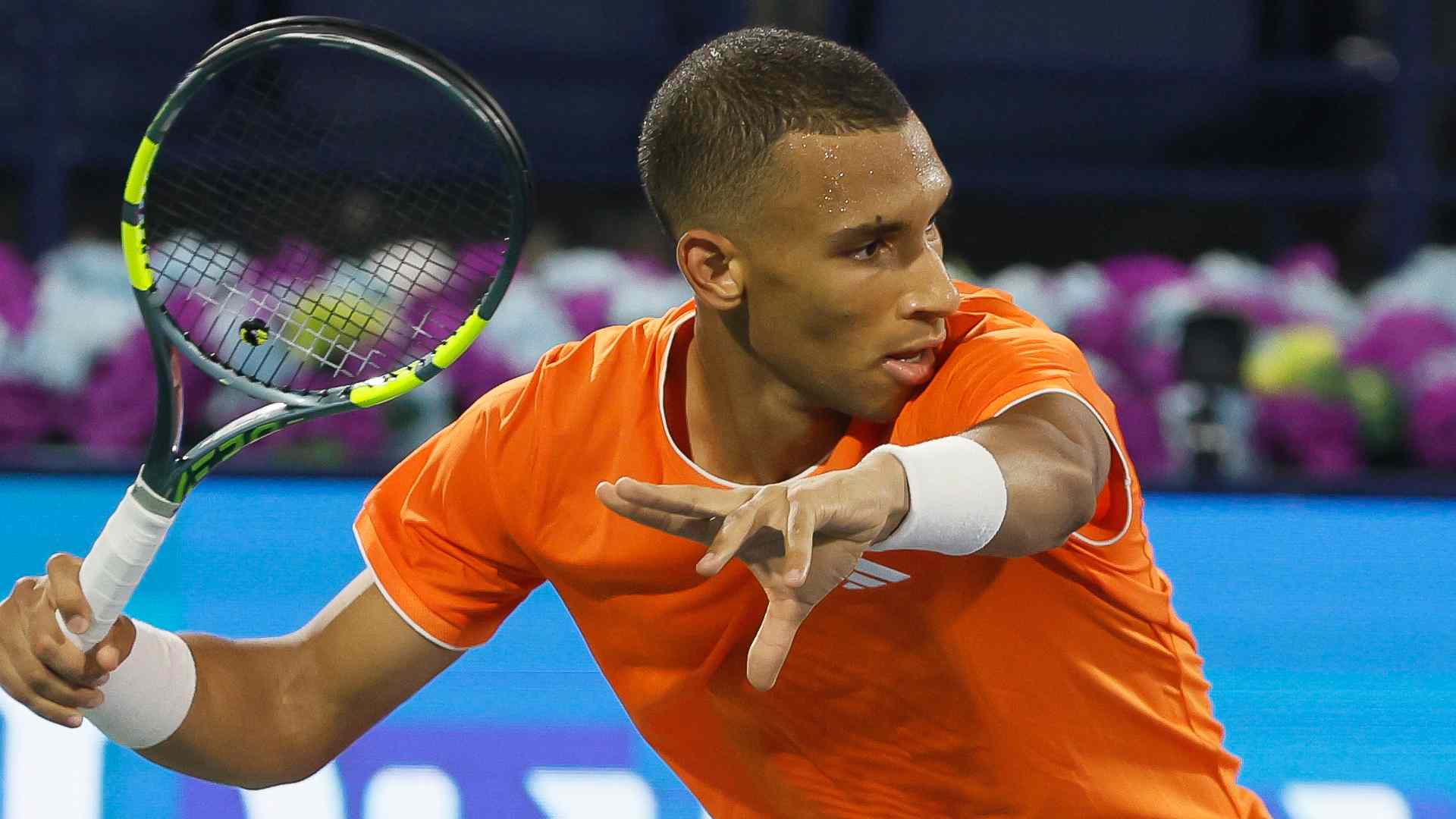
Auger-Aliassime Secures Dubai Quarterfinal Spot with Break-Point Efficiency
Felix Auger-Aliassime, the dynamic Canadian talent, has successfully navigated his path into the quarterfinals of the prestigious Dubai Open, showcasing a blend of grit and clinical precision in his opening matches. After a nail-biting encounter in his initial outing, Auger-Aliassime demonstrated impressive composure and strategic brilliance to secure his spot among the final eight. This progression highlights not only his evolving game but also his mental fortitude on the big stage. His journey through the early rounds of the tournament, particularly his performance in the auger-aliassime dubai opener, offers a fascinating study in high-pressure tennis.
The Grueling Start: Auger-Aliassime's Dubai Opener Against Zhang Zhizhen
The path to the quarterfinals was far from straightforward for the tournament's top seed. Felix Auger-Aliassime's first match, the highly anticipated
Felix Auger-Aliassime Battles Through Match Point Drama in Dubai Opener against China's Zhang Zhizhen, proved to be a stern test of nerves and skill. While ultimately prevailing with a 6-3, 7-6 (4) victory, the scoreline belies the intense drama that unfolded, especially in the second set.
Auger-Aliassime found himself in control for much of the match, displaying a strong serving performance with 11 aces and winning an impressive 78 percent of his first-serve points. He also managed to break Zhang twice from 11 opportunities. However, the closing stages of the second set became a dramatic battle of wills. The Canadian missed a staggering six match points – two while returning at 5-4, and then three more on his own serve at 6-5. The latter game saw him lead 40-15, only for Zhang to stage a remarkable comeback, forcing the game to deuce multiple times before snatching it away.
Recounting the experience, Auger-Aliassime candidly admitted, "I stopped counting at some point; it was getting too frustrating." This quote perfectly encapsulates the mental tightrope professional athletes often walk. Despite being in the commanding position of having match points, the pressure can shift unexpectedly. "Having match points is the position you want to be in as a player, but it’s weird how the mind plays a trick on you," he reflected. "How much further I am from losing than he is — he should be the one that’s tight. But I told myself, ‘If there is a third set, I’ll be there.’" This testament to his resilience ultimately saw him close out the match in the tiebreaker, winning two of the last three points after taking a 5-3 lead. Overcoming such a challenging opener, where an opponent like Zhang also served well (10 aces) and won 71% of first-serve points while denying all four of Auger-Aliassime's break opportunities, laid a crucial foundation for his tournament run.
Clinical Efficiency: Dominating Giovanni Mpetshi Perricard
Following the emotional rollercoaster of his opener, Felix Auger-Aliassime delivered a significantly more clinical performance in his subsequent match, securing his quarterfinal berth with a convincing 6-4, 6-4 victory over French qualifier Giovanni Mpetshi Perricard. This match demonstrated a stark contrast in his approach and execution, particularly in capitalizing on crucial moments.
Against the big-serving Frenchman, Auger-Aliassime's break-point conversion rate was nothing short of impressive. He managed to convert three of the five break-point opportunities he created on Mpetshi Perricard's serve, a significant improvement from his opener. This efficiency was the cornerstone of his victory. In the opening set, the Canadian seized the initiative with consecutive breaks in the seventh and ninth games, completely disrupting his opponent's rhythm and asserting his dominance.
The second set saw a similar pattern, with Auger-Aliassime pouncing early to gain an advantage. Once he had his nose in front, he maintained a high level of play, serving out the match with confidence to book a meeting with Jiri Lehecka in the last eight. This straight-sets win, achieved through strategic aggression and flawless execution on key points, showcased Auger-Aliassime's ability to adapt and elevate his game under pressure. It was a performance that spoke volumes about his current form and his hunger to go deep in the tournament.
The Anatomy of Success: Break-Point Conversion and Mental Fortitude
The contrasting nature of Auger-Aliassime's first two matches in Dubai offers valuable insights into the intricate dynamics of professional tennis, particularly the critical role of break-point conversion and mental fortitude. In his opener against Zhang Zhizhen, the challenge was less about creating opportunities and more about *converting* them. Making only 2 out of 11 break points against Zhang, coupled with the agonizing struggle to close out match points, highlighted how mental tension can manifest, even for a seasoned pro. His quote about the "mind playing tricks" is a universal truth in sports, where the perceived distance from victory can sometimes trigger unforeseen anxieties. Zhang's ability to save 9 break points and then battle back from 40-15 down on match point was a testament to his own resilience, but it also underscored the pressure on the server to finish strong.
Conversely, against Giovanni Mpetshi Perricard, Auger-Aliassime turned this statistic around dramatically, converting an impressive 3 out of 5 break points. This efficiency was the decisive factor, allowing him to control the flow of both sets. What can aspiring players, or even seasoned pros, learn from this?
- Seizing the Moment: Break points are often the most high-stakes moments in a game. For the returner, it's an opportunity to gain a crucial advantage; for the server, it's a test of nerve. Auger-Aliassime's improved conversion rate against Perricard demonstrates the power of focus and aggressive play when it matters most.
- Strategic Aggression: While not reckless, Auger-Aliassime's approach on break points was likely more assertive in the second match. This involves selecting the right shot, aiming for targets with conviction, and playing with a clear intention to win the point, rather than just keeping the ball in play.
- Mental Reset: The ability to move past missed opportunities – like those six match points against Zhang – and re-focus is paramount. Auger-Aliassime's internal monologue ("If there is a third set, I’ll be there") illustrates a powerful self-talk mechanism to prevent frustration from derailing his entire match.
- Recognizing Patterns: A player's break-point conversion can be influenced by their opponent's serving patterns and return vulnerabilities. Analyzing Mpetshi Perricard's serve allowed Auger-Aliassime to identify weaknesses and exploit them more effectively.
This shift from battling self-doubt to executing with precision underscores the fluidity of mental performance in tennis. Auger-Aliassime's ability to quickly course-correct after a mentally draining opener speaks volumes about his psychological strength and his team's strategic adjustments.
Felix Auger-Aliassime's Momentum and What Lies Ahead
Felix Auger-Aliassime’s strong run in Dubai is not an isolated event but rather a continuation of his impressive form leading up to the tournament. The world number eight has been on a tear, lifting the trophy in Montpellier just prior to Dubai and then finishing as a runner-up in Rotterdam. This sequence of performances means he has won nine of his past ten matches, building significant momentum and confidence.
His history at the Dubai event also bodes well, as he made the final in last year's edition before falling to Greece's Stefanos Tsitsipas. This experience on the Dubai courts, combined with his current vein of form, positions him as a serious contender for the title this year. His ability to navigate both mentally demanding matches and execute with clinical efficiency suggests a player who is finding his rhythm and peaking at the right time.
Looking ahead, Auger-Aliassime is set to face Jiri Lehecka in the quarterfinals. Lehecka, a talented and powerful player, will undoubtedly pose another significant challenge. However, Auger-Aliassime’s improved break-point conversion, formidable serve, and enhanced mental resilience demonstrated in the
From Match Point Drama to Quarterfinals: Auger-Aliassime's Dubai Progress suggest he is well-equipped to advance further. His fans will be eagerly watching to see if he can maintain this momentum and perhaps even surpass his previous best performance at the Dubai Championships.
Conclusion
Felix Auger-Aliassime’s journey to the Dubai quarterfinals has been a compelling narrative of perseverance, adaptation, and tactical brilliance. From the dramatic twists of his opening match against Zhang Zhizhen, where he battled not only his opponent but also his own mental demons surrounding match points, to the clinical efficiency displayed against Giovanni Mpetshi Perricard, the Canadian has shown the full spectrum of his capabilities. His exceptional break-point conversion rate in the second match was a masterclass in seizing opportunities, laying the foundation for his straight-sets victory. With strong form preceding this tournament and a history of reaching the final in Dubai, Auger-Aliassime is undoubtedly building towards something special. As he prepares for the next challenge, the tennis world watches with anticipation, eager to see if this formidable talent can continue his impressive run and claim the coveted Dubai Open title.